
My First Time Cooking with Chive Blossoms
The first time I noticed chive blossoms, I was in my tiny spring garden, plucking herbs for a potato salad when I saw these stunning purple puffs swaying on top of my chive plants. They looked more like wildflowers than something edible. But curiosity (and Google) led me to discover that those delicate blooms weren’t just safe—they were delicious.
I snipped a few, tossed them into butter, and suddenly had a garlicky, floral spread that transformed toast into something fancy. That moment sparked my love for chive blossom recipes, and I’ve been infusing oils, folding petals into butters, and making vinegars ever since.
If you’ve enjoyed preserving blooms like honeysuckle jelly or crafting something fragrant like Japanese pink salt, you’re going to love what chive blossoms can bring to your kitchen. They’re subtle, herbal, floral, and ready to elevate even your most everyday dishes.
Table of Contents
Table of Contents
Chive Blossom Recipes
- Total Time: 10
- Yield: Varies by use
- Diet: Vegetarian
Description
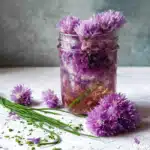
Chive blossoms bring gentle onion flavor and floral beauty to your kitchen. This recipe teaches you how to make vinegar, butter, and salt using these edible flowers.
Ingredients
1 cup fresh chive blossoms
1 cup white wine vinegar
1 stick unsalted butter, softened
1 tsp lemon zest
1/4 cup sea salt flakes
Instructions
1. To make vinegar: Fill a jar with chive blossoms and cover with vinegar. Let sit 1–2 weeks, then strain.
2. To make butter: Mix softened butter with chopped blossoms, lemon zest, and a pinch of salt. Chill before serving.
3. To make salt: Dry blossoms for 1–2 days, crush, and combine with sea salt. Store airtight.
Notes
Use only clean, dry blossoms free of bugs.
White wine or champagne vinegar works best for flavor and color.
Keep infused vinegar in a cool, dark spot.
- Prep Time: 10
- Category: Condiment
- Method: No-cook
- Cuisine: Herbal
Nutrition
- Serving Size: 1 tbsp
- Calories: 45
- Sugar: 0g
- Sodium: 70mg
- Fat: 4g
- Saturated Fat: 2.5g
- Unsaturated Fat: 1.5g
- Trans Fat: 0g
- Carbohydrates: 0g
- Fiber: 0g
- Protein: 0g
- Cholesterol: 11mg
What Are Chive Blossoms and Why Use Them in Recipes
Chive blossoms are the edible purple flowers that grow from mature chive plants in late spring. Their flavor is milder than the chive stems—think onion with a hint of floral sweetness and their texture is light and airy.
Beyond their taste, they’re a feast for the eyes. Tossing a few into a vinaigrette or finishing a dish with a scatter of petals gives your meals an instantly elegant, seasonal flair. That’s why chive blossom recipes are more than just a trend—they’re a flavorful way to embrace what’s growing right now.
Can You Eat the Blooms of Chives?
Yes, you absolutely can eat chive blossoms. These purple pom-poms aren’t just for show—they’re edible and loaded with flavor. While the stalks deliver that classic oniony bite, the blossoms bring a gentler, more aromatic profile that works beautifully in compound butters, fresh salads, and savory bakes.
To eat them, gently pull the petals apart into smaller florets. You can mix them into softened butter for an herby spread, fold them into biscuit dough, or sprinkle over roasted veggies for color and flavor. If you’ve ever added edible petals to a dessert like rhubarb cookies or topped carrot cake bars with something floral, chive blossoms will feel right at home in your kitchen.
What Can You Do with the Purple Flowers from Chives?
There’s no shortage of creativity when it comes to using chive blossom flowers. Here are just a few delicious ways to showcase them:
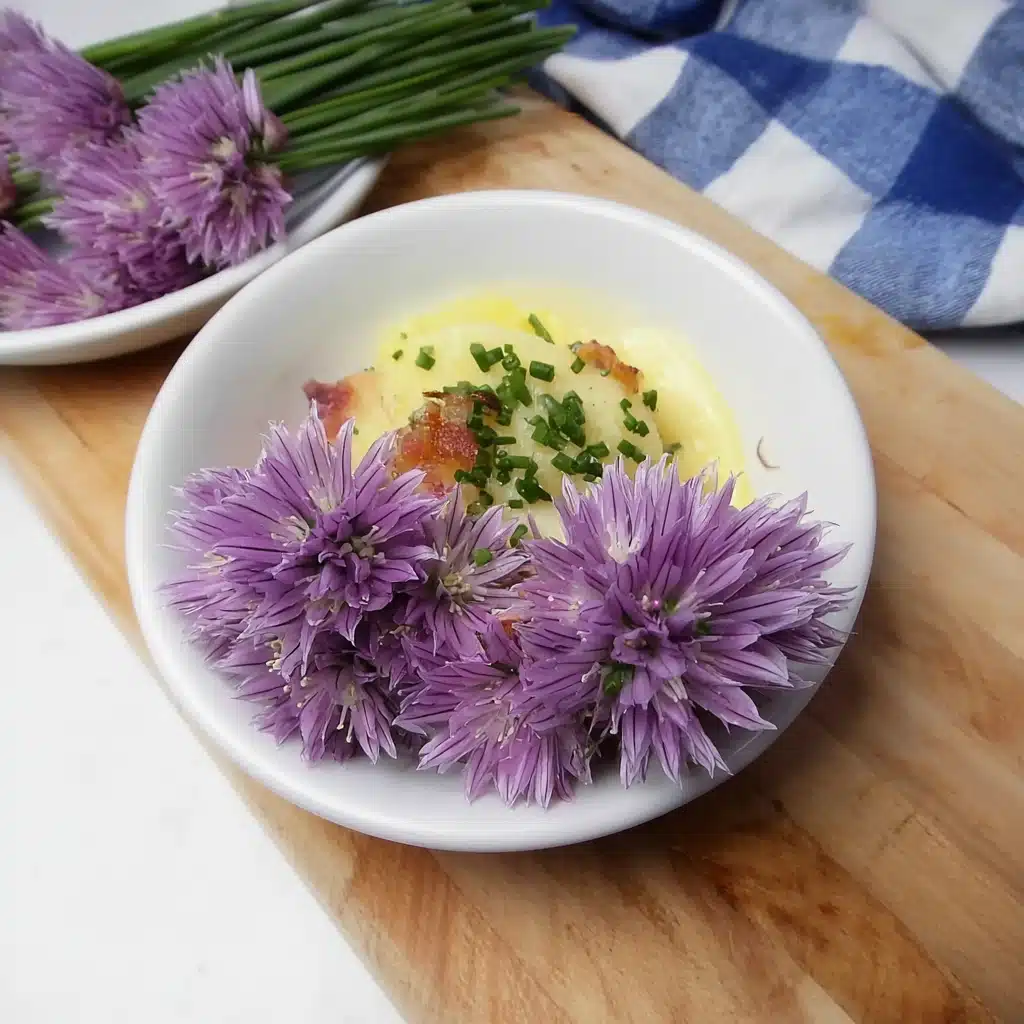
- Chive blossom butter: Blend petals into softened butter with a pinch of sea salt and lemon zest. Perfect on grilled corn, warm toast, or spring pasta.
- Chive blossom salt: Dry the florets and mix with flaked sea salt. Store in a small jar and use it as a finishing salt on eggs, grilled veggies, or roasted potatoes.
- Chive blossom garnish: Sprinkle fresh florets on soups, salads, or goat cheese crostini for a pop of color and a mild onion note.
These versatile flowers deserve a place in your herb rotation not just for how they look, but for the subtle flavor they bring to everyday meals. In the next section, we’ll walk through how to make one of the most beautiful condiments of spring: chive blossom vinegar.
What Is the Best Vinegar for Chive Blossoms?
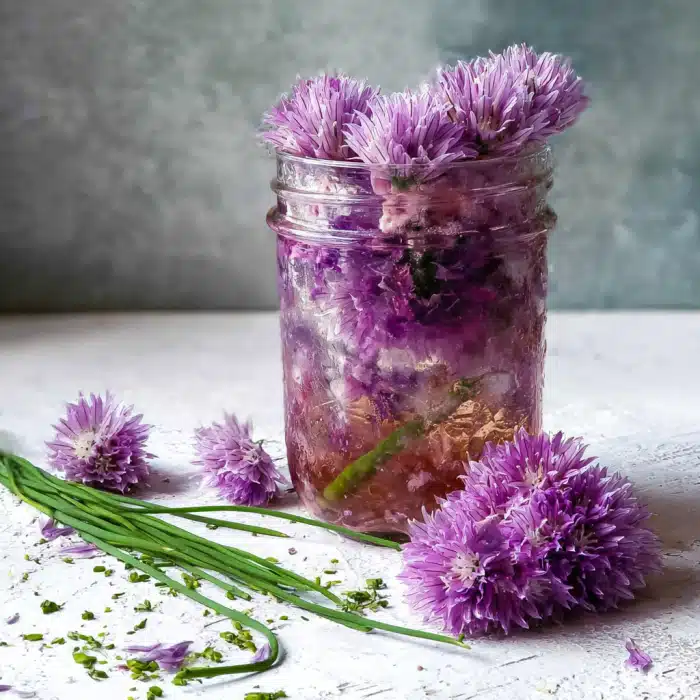
If you’ve never made chive blossom vinegar, you’re in for a treat. The blooms tint the vinegar a gorgeous blush pink and infuse it with a subtle oniony brightness. But which vinegar works best? For a clean, balanced flavor, white wine vinegar is the top choice. It complements the blossoms without overpowering them and allows the beautiful color to shine through.
You can also use champagne vinegar for a lighter, more floral result. Avoid dark vinegars like balsamic they’ll mask the delicate color and flavor of the chive blossoms.
Use this infused vinegar in salad dressings, marinades, or to finish roasted vegetables. It adds a gourmet touch to any dish, much like the unique edge of something homemade like Japanese pink salt.
Easy Chive Blossom Vinegar, Butter, and Salt Recipes
Here’s how to make three simple chive blossom recipes that bring major flavor to your pantry:
- Chive Blossom Vinegar
- Fill a clean jar halfway with chive blossoms.
- Cover with white wine vinegar.
- Seal, let sit for 1–2 weeks, then strain into a clean bottle.
- Chive Blossom Butter
- Mix 1 stick of softened butter with 2 tbsp chopped chive blossoms, 1 tsp lemon zest, and sea salt to taste.
- Roll into a log and chill.
- Chive Blossom Salt
- Dry blossoms on a paper towel for 2 days.
- Crush with flaked sea salt (1 part blossom to 4 parts salt).
- Store in an airtight jar for up to 3 months.
Once you try these, you’ll find yourself tossing chive blossoms into everything from vinaigrettes to compound butters. In the next section, we’ll explore even more ideas for using them fresh from picnic spreads to spring-inspired appetizers.
What Can You Make with Chive Blossoms?
When it comes to chive blossom recipes, the possibilities are far more exciting than you might expect. These floral-edged onion blooms can be the highlight of savory dishes, condiments, or even light spring fare. Here are a few of my favorite ways to use them fresh:
- Sprinkled on egg salad or deviled eggs
- Folded into cream cheese or Greek yogurt for a spring dip
- Garnishing grilled chicken or roasted carrots
- Tossed with baby greens and citrus for a floral salad
Pairing them with something creamy like the tang of jello and Greek yogurt or goat cheese—really highlights their flavor. And don’t underestimate their visual impact. Even just a few petals scattered over orange dreamsicle salad will make it look farmers’ market fresh.
Fresh Chive Blossom Recipes for Spring & Summer
Here’s a quick idea that’s always a crowd-pleaser:
Spring Herb Butter Board with Chive Blossoms
Spread whipped cream cheese or butter across a board, then top with:
- Chive blossom petals
- Fresh dill, parsley, and lemon zest
- Cracked pepper and flaked sea salt
- Serve with warm baguette or crackers
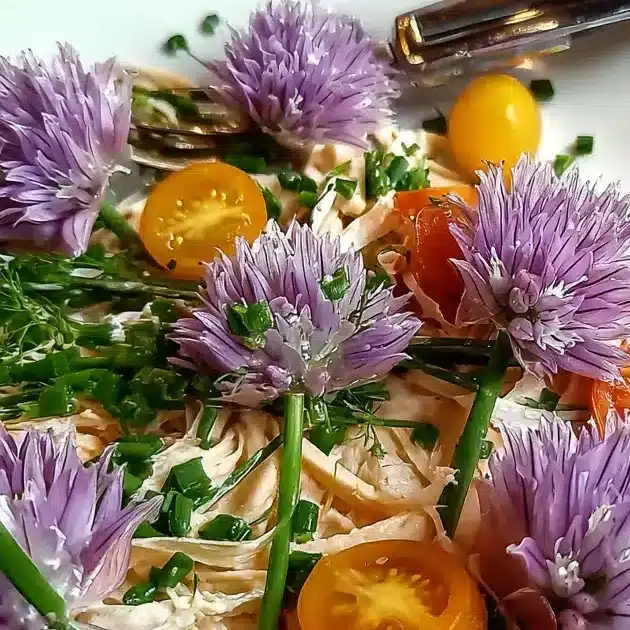
Or try Chive Blossom Potato Salad: Mix baby potatoes with sour cream, whole-grain mustard, chopped chive stems, and blossom petals for a dish that’s both rustic and elegant.
Frequently Asked Questions About Chive Blossom Recipes
What can you make with chive blossoms?
You can use chive blossoms to make infused vinegars, compound butters, flavored salts, herby cream cheese spreads, and stunning edible garnishes. Their subtle onion flavor works beautifully in salads, soups, deviled eggs, and even biscuit dough.
Can you eat the blooms of chives?
Yes, chive blossom flowers are edible and flavorful. They taste like a lighter version of the chive stem, with a slight floral note. Pull them apart into small florets before adding them to dishes for both visual flair and flavor.
What can you do with the purple flowers from chives?
You can dry them for salt blends, steep them in vinegar, mix into herb butters, or scatter fresh petals over meals. Their delicate texture and soft garlic-onion flavor make them an excellent ingredient in seasonal recipes and herbal condiments.
What is the best vinegar for chive blossoms?
White wine vinegar is the best option for chive blossom vinegar because it captures their bright flavor and lets the pink hue shine through. Champagne vinegar is another great light option, but avoid balsamic or red wine vinegar as they overpower the blossoms.
Conclusion: Bring a Burst of Bloom to Every Bite
Chive blossom recipes are one of those quiet culinary joys simple, seasonal, and deeply satisfying. Whether you’re tossing them fresh into a salad, stirring them into butter, or preserving them in vinegar, these edible flowers let you turn a humble herb garden into something gourmet.
If you’ve ever admired your flowering chives without knowing what to do with them, now’s your chance to let them shine. These purple puffs are more than pretty—they’re packed with flavor and endlessly adaptable. Give one of these ideas a try, and you might find yourself looking forward to chive season every spring.
For more recipes follow me pinterest