
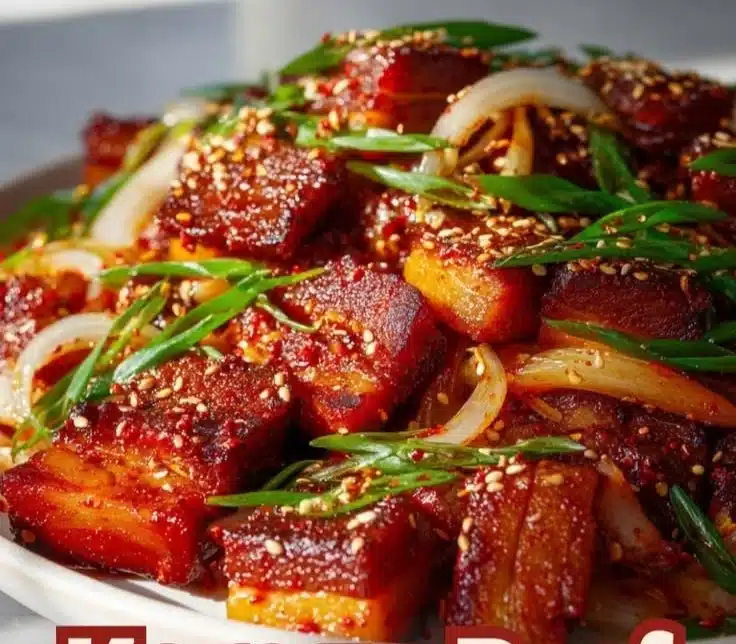

How to make Healthy Korean Beef Belly Skillet
Ingredients
- Beef belly, thinly sliced
- Low-sodium soy sauce
- Sesame oil
- Garlic, minced
- Ginger, grated
- Gochujang (Korean chili paste)
- Natural sweetener (honey or maple syrup)
- Non-alcoholic mirin alternative
- Fresh vegetables (sliced onions, bell peppers, mushrooms, shredded carrots, zucchini)
- Fresh spinach or baby bok choy
- Sliced green onions, for garnish
- Toasted sesame seeds, for garnish
- Neutral cooking oil (like avocado or grapeseed oil)
Directions
- Slice the beef belly against the grain into pieces about 1/4-inch thick. Trim any excessive visible fat if desired and pat the beef slices dry with paper towels.
- In a medium bowl, combine the low-sodium soy sauce, sesame oil, minced garlic, grated ginger, gochujang, natural sweetener, and non-alcoholic mirin alternative. Whisk until smooth, then add the sliced beef belly and toss to coat. Cover and marinate in the refrigerator for at least 20 minutes.
- Slice the onion, bell peppers, and zucchini into thin strips. Halve or quarter the mushrooms and thinly slice or julienne the carrots.
- Heat a large skillet over medium-high heat and add a tablespoon of neutral cooking oil. Add the marinated beef belly in a single layer and cook for 2-3 minutes per side until browned. Remove from the skillet and set aside.
- In the same skillet, add the sliced onions and carrots and sauté for 3-4 minutes. Then add the bell peppers and mushrooms, cooking for another 4-5 minutes until tender-crisp.
- Return the seared beef belly and any juices to the skillet with the vegetables. Stir in any remaining marinade and cook for 1-2 minutes. Add fresh spinach or baby bok choy and cook until wilted, about 1 minute.
- Divide the skillet contents among serving plates and garnish with sliced green onions and toasted sesame seeds. Serve over brown rice, quinoa, or cauliflower rice.
Why You’ll Love This Healthy Korean Beef Belly Skillet
This Healthy Korean Beef Belly Skillet is not only delicious and satisfying, but it’s also packed with nutrition. The beef belly provides rich flavors, while the vegetables ensure you get a variety of nutrients in each bite. The combination of hearty beef and fresh greens creates a balanced meal that you and your family will enjoy. Plus, making this dish at home allows you to control the ingredients and make it healthier by using low-sodium sauces and fresh produce.
This recipe offers a delightful mix of sweet, spicy, and savory flavors that Korean cuisine is known for. The gochujang gives it a kick, while the honey or maple syrup adds a touch of sweetness. The marinated beef belly, when cooked, has a juicy texture that perfectly complements the crisp vegetables.
With this dish, you’ll not only satisfy your taste buds but also nourish your body with good ingredients. It’s ideal for a weeknight dinner when you want something quick, yet gourmet.
Nutriments Benefits
- Beef Belly: A good source of protein, zinc, and B vitamins, which are essential for body growth and energy production.
- Vegetables: The bell peppers, zucchini, carrots, and spinach add vitamins A and C, as well as fiber, which is important for digestion.
- Gochujang: This fermented paste provides probiotics that promote gut health.
- Sesame Oil: Rich in antioxidants and healthy fats, it helps maintain heart health and enhances skin and hair health.
- Low-Sodium Soy Sauce: A healthier alternative to regular soy sauce, reducing sodium intake while still providing a savory flavor.
Together, these ingredients create a meal that not only tastes great but also fuels your body with essential nutrients.
What to Serve With Healthy Korean Beef Belly Skillet
To elevate your meal, consider serving this dish with:
- Brown Rice: Offers more fiber than white rice and adds a nutty flavor that pairs beautifully with the beef and vegetables.
- Quinoa: A protein-rich grain that complements the dish well and adds a unique texture.
- Cauliflower Rice: A low-carb alternative, perfect for those looking to reduce calories and carbs.
- Kimchi: A traditional Korean side dish that adds a spicy and tangy kick, along with probiotics.
- Pickled Vegetables: They provide a refreshing contrast to the richness of the beef belly.
These complements deepen the flavors while adding more nutrition to your meal.
How to Store Healthy Korean Beef Belly Skillet
To store your Healthy Korean Beef Belly Skillet:
- Cool Down: Allow the skillet to cool to room temperature.
- Container: Transfer leftover portions into an airtight container.
- Refrigerate: Store in the refrigerator for up to three days.
- Reheat: When ready to eat, simply reheat in a skillet or microwave until warmed through. You can add a splash of water or vegetable broth to prevent drying out.
If you plan to store it longer, you can freeze the cooked dish in an airtight container for up to three months. Thaw it in the refrigerator overnight before reheating.
Tips and Mistakes to Avoid
- Slice Meat Correctly: Make sure to slice the beef belly against the grain for tender pieces.
- Don’t Rush the Marinade: Allow the beef to marinate for at least 20 minutes. The flavors penetrate better and enhance the taste.
- Avoid Overcrowding the Skillet: Cook the beef in batches if needed, as overcrowding will cause steaming rather than browning.
- Watch the Heat: Cooking at medium-high heat ensures the beef browns without burning. Adjust heat levels as necessary.
Following these tips will help you achieve the best flavor and texture.
Variation (if any)
If you want to change things up:
- Add More Veggies: Experiment with bok choy, snap peas, or broccoli for even more color and nutrients.
- Use Different Meat: Try chicken thighs or tofu for a protein alternative that’s just as tasty.
- Make it Spicier: Add sliced jalapeños or top it with sliced red chili for an extra kick.
- Serve it Wraps: Instead of serving it over rice, use lettuce leaves to make fresh wraps for a fun twist.
These variations can keep the dish exciting and cater to your taste preferences.
FAQs
-
Can I use a different cut of beef?
Yes! While beef belly provides great flavor, you can substitute it with flank steak, sirloin, or even ground beef. Just adjust cooking time accordingly. -
Is this dish kid-friendly?
Yes, the flavors can be adjusted to suit children’s palates. Lower the spice level by using less gochujang and adding more sweetener if needed. -
Can I make this dish vegetarian?
Absolutely! Substitute beef with tofu or tempeh. Make sure to adjust the marinating time and cook it until golden brown for optimal texture. -
What if I don’t have gochujang?
If you can’t find gochujang, you can make a substitute by mixing miso paste with a little chili powder and maple syrup for sweetness. -
Can I meal prep this dish?
Yes! It’s great for meal prep. Store individual portions in airtight containers for quick lunches or dinners throughout the week.
Making a Healthy Korean Beef Belly Skillet is an easy way to prepare a delicious, nutritious meal that the whole family will enjoy! With simple steps and wholesome ingredients, you can bring a taste of Korean cuisine to your dinner table.
Print
Healthy Korean Beef Belly Skillet
- Total Time: 35 minutes
- Yield: 4 servings
- Diet: Paleo
Description
A delicious and nutritious Korean-inspired dish featuring marinated beef belly and fresh vegetables, perfect for a quick weeknight dinner.
Ingredients
- Beef belly, thinly sliced
- Low-sodium soy sauce
- Sesame oil
- Garlic, minced
- Ginger, grated
- Gochujang (Korean chili paste)
- Natural sweetener (honey or maple syrup)
- Non-alcoholic mirin alternative
- Fresh vegetables (sliced onions, bell peppers, mushrooms, shredded carrots, zucchini)
- Fresh spinach or baby bok choy
- Sliced green onions, for garnish
- Toasted sesame seeds, for garnish
- Neutral cooking oil (like avocado or grapeseed oil)
Instructions
- Slice the beef belly against the grain into pieces about 1/4-inch thick. Trim excessive fat, if desired, and pat dry with paper towels.
- In a bowl, combine soy sauce, sesame oil, garlic, ginger, gochujang, natural sweetener, and mirin alternative. Whisk until smooth, add beef belly, toss to coat, cover, and marinate for at least 20 minutes.
- Slice the onion, bell peppers, and zucchini into thin strips. Halve or quarter the mushrooms and julienne the carrots.
- Heat a skillet over medium-high heat, add a tablespoon of oil, then the marinated beef in a single layer. Cook for 2-3 minutes per side until browned. Remove and set aside.
- In the same skillet, add the onions and carrots. Sauté for 3-4 minutes, then add bell peppers and mushrooms, cooking for another 4-5 minutes.
- Return beef and any juices to the skillet, stir in remaining marinade, and cook for 1-2 minutes. Add spinach or bok choy and cook until wilted, about 1 minute.
- Divide among serving plates and garnish with green onions and sesame seeds. Serve over brown rice, quinoa, or cauliflower rice.
Notes
Great meal prep option; store leftovers in airtight containers for up to three days.
- Prep Time: 20 minutes
- Cook Time: 15 minutes
- Category: Main Course
- Method: Stir-frying
- Cuisine: Korean
Nutrition
- Serving Size: 1 serving
- Calories: 450
- Sugar: 6g
- Sodium: 300mg
- Fat: 18g
- Saturated Fat: 6g
- Unsaturated Fat: 9g
- Trans Fat: 0g
- Carbohydrates: 30g
- Fiber: 4g
- Protein: 30g
- Cholesterol: 70mg

Healthy Korean Beef Belly Skillet
- Total Time: 35 minutes
- Yield: 4 servings
- Diet: Paleo
Description
A delicious and nutritious Korean-inspired dish featuring marinated beef belly and fresh vegetables, perfect for a quick weeknight dinner.
Ingredients
- Beef belly, thinly sliced
- Low-sodium soy sauce
- Sesame oil
- Garlic, minced
- Ginger, grated
- Gochujang (Korean chili paste)
- Natural sweetener (honey or maple syrup)
- Non-alcoholic mirin alternative
- Fresh vegetables (sliced onions, bell peppers, mushrooms, shredded carrots, zucchini)
- Fresh spinach or baby bok choy
- Sliced green onions, for garnish
- Toasted sesame seeds, for garnish
- Neutral cooking oil (like avocado or grapeseed oil)
Instructions
- Slice the beef belly against the grain into pieces about 1/4-inch thick. Trim excessive fat, if desired, and pat dry with paper towels.
- In a bowl, combine soy sauce, sesame oil, garlic, ginger, gochujang, natural sweetener, and mirin alternative. Whisk until smooth, add beef belly, toss to coat, cover, and marinate for at least 20 minutes.
- Slice the onion, bell peppers, and zucchini into thin strips. Halve or quarter the mushrooms and julienne the carrots.
- Heat a skillet over medium-high heat, add a tablespoon of oil, then the marinated beef in a single layer. Cook for 2-3 minutes per side until browned. Remove and set aside.
- In the same skillet, add the onions and carrots. Sauté for 3-4 minutes, then add bell peppers and mushrooms, cooking for another 4-5 minutes.
- Return beef and any juices to the skillet, stir in remaining marinade, and cook for 1-2 minutes. Add spinach or bok choy and cook until wilted, about 1 minute.
- Divide among serving plates and garnish with green onions and sesame seeds. Serve over brown rice, quinoa, or cauliflower rice.
Notes
Great meal prep option; store leftovers in airtight containers for up to three days.
- Prep Time: 20 minutes
- Cook Time: 15 minutes
- Category: Main Course
- Method: Stir-frying
- Cuisine: Korean
Nutrition
- Serving Size: 1 serving
- Calories: 450
- Sugar: 6g
- Sodium: 300mg
- Fat: 18g
- Saturated Fat: 6g
- Unsaturated Fat: 9g
- Trans Fat: 0g
- Carbohydrates: 30g
- Fiber: 4g
- Protein: 30g
- Cholesterol: 70mg